A Series B enterprise AI platform had just raised $20M. The enterprise motion was working, but sales cycles were long and the board wanted faster growth. A well-funded competitor was gaining ground, and leadership decided to go after the mid-market.
More than 25 reps were hired in a few months. SDRs, AEs, the standard playbook. The team had 25,000 accounts in HubSpot and access to 100,000 more in ZoomInfo, pulled on basic filters like industry and headcount. Leadership had also committed to the kind of outreach competitors were not doing: cold calls, custom videos, real LinkedIn engagement. That is expensive per account, so each rep was capped at 100 accounts a quarter.
The Head of GTM was squeezed from both sides. The CEO expected returns on a major headcount investment. Twenty-five new hires looked to him for direction — who to call, what to say, why these accounts. He didn’t have good answers, because the company had never defined a mid-market motion. The enterprise side had years of accumulated knowledge about its buyers. The mid-market team had a ZoomInfo export and a mandate to move fast.
Twenty-five reps at 100 accounts a quarter is 2,500 accounts the team could actually work, out of 125,000 in reach. Every quarter they could touch two percent of their market, and choosing which two percent was the whole job. Nothing in the stack could do it. HubSpot’s scoring ranked companies on revenue, location and headcount, which says nothing about whether a company has the problem. Judging whether an account was worth a rep’s quarter takes an hour of reading — the tools they use, how the team is structured, what their public experience looks like, what changed recently. Nobody had an hour per account, so nobody did it. Hundreds of dials a day went into a list of thousands with no scoring anyone trusted and no shared picture of who they were trying to reach.
Meetings were booked. Some with the wrong accounts. Consistency was the problem: a few reps were delivering, but most were working companies that would cost more to service than they were worth. Twenty-five new hires, hired at a premium to move fast, months of ramp with little to show, and a growing pile of misfit deals.
The alternative was to kill outbound, move the SDRs to enterprise, and try marketing-led for mid-market. Survivable operationally, but it would tell the board the mid-market bet had failed.
We started where we always start: with the decisions. Two of them were being made dozens of times a day without context. Which of these accounts is worth my quarter? What do I need to know before I pick up the phone?
Both are high-judgment and low-stakes: getting them wrong wastes an afternoon, it does not lose a customer or move money. That combination is exactly where a coworker can run on its own. Who actually gets called, and what gets said on the call, is a different matter. That stays with the rep, and nothing we built changes it.
We ran working sessions with leadership and the top reps to write down judgment the best people had built up but never recorded: what the product is really for, which customers had worked and why, what makes an account worth pursuing, which signals show the problem is present, what changes the conversation. Not firmographics; things like which support tooling they ran, how the team was structured, what their public support experience looked like, whether they were hiring into the function, what had changed at the top. Each data point got a weight and a written rationale. We argued about the weights, then re-ran the scoring by hand on sample accounts to check the output matched what a good SDR would conclude after an hour of reading.
Decision map. Capture the judgment, define data points and weights, agree the autonomy line, validate against real accounts with experienced reps.
Then we built the coworker. It runs the research on each account — growth and hiring, the technology in use, recent funding or leadership changes, the competitive picture, what the company’s own site shows — and scores it against the map we had defined together: a fit score from 1 to 100 with a short written explanation of which signals were present, what they meant, what to open with and what objection to expect. The explanation matters as much as the score: a rep can disagree with it. It scored 12,000 companies from their HubSpot in a day. At an hour of reading per account, that is roughly 12,000 hours of work, or about three months of the entire team doing nothing else, by our estimate.
It was built inside the enrichment platform the team already ran, and the top segment was split across reps using HubSpot lists syncing into the outreach tool they already used. No new software, no changed sequences. The coworker never contacts anyone and never decides who gets called — it prepares. Before picking up the phone a rep reads a brief explaining why this company was on their list, what challenges it likely faced, and what mattered to them. That changed the nature of the conversation entirely.
Build and integrate. Research and scoring in production, 12,000 accounts scored, wired into the HubSpot workflows the team already ran.
4 weeks total from kickoff to live system.
Pipeline in the quarter we joined was $629K, down by half from the quarter before. That was the quarter the shutdown was being discussed. The next quarter it was $982K, 1.5x. The one after, $2.83M. We would rather not measure that against the trough we walked into, so measure it against the best quarter the motion had ever produced before we arrived, $1.23M: 2.3 times their previous peak. Hiring stopped — not a freeze, but because the reps already there began producing at the level leadership had planned to reach by adding headcount. Reps went from quantity to quality: fewer calls, better conversations, and more of them turning into deals.
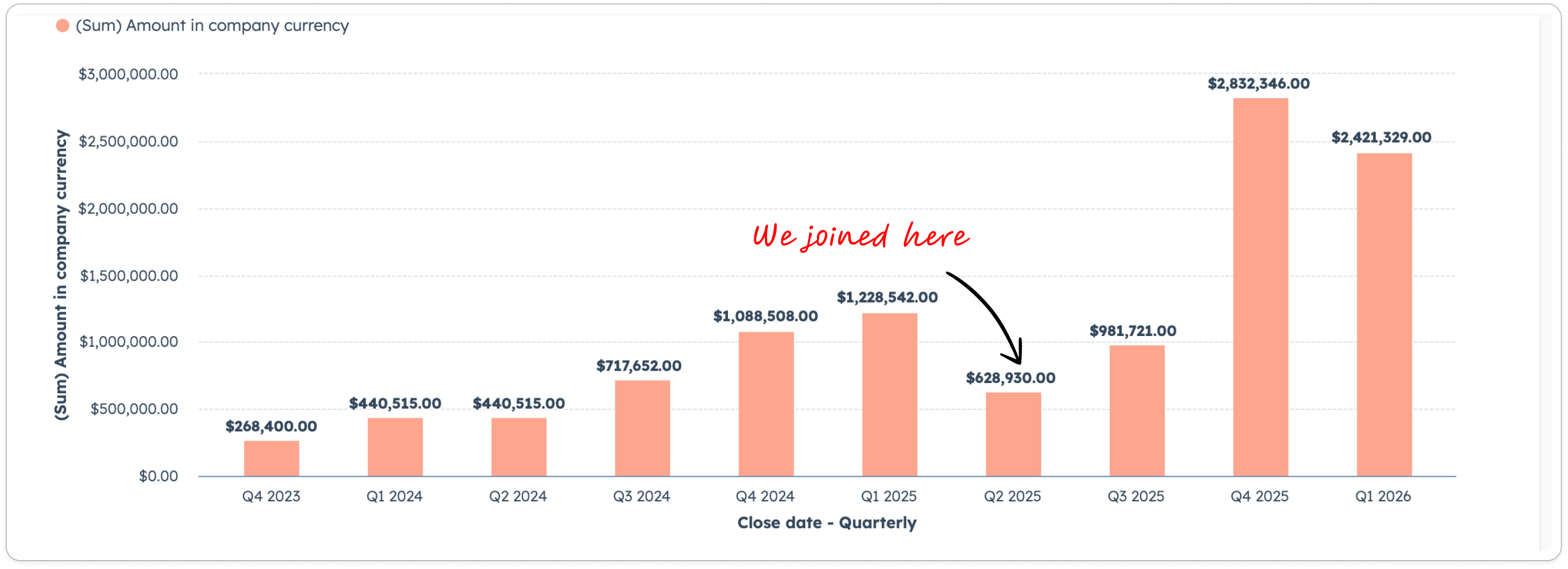
By year-end, the mid-market team had generated over $2M in revenue. A motion weeks from being shut down ended the year as a revenue line the company could plan around.
The scoring became the reference point for the rest of the go-to-market. Inbound leads are now checked against the same map, and when the team expands into a new vertical it starts from the existing decision map rather than from nothing.
Deployment is where the work starts. Scoring drifts as the market moves, sources change shape, and reps disagree with the coworker in ways that are usually informative. We track which data points actually predict fit and adjust the weights, so the second month’s targeting is sharper than the first, and we read cost and performance rather than waiting for someone to complain.
The coworker’s authority has moved in one direction and held in another. What it is trusted to judge has widened, from outbound account selection to inbound qualification, and the team now uses its briefs to sharpen its own picture of the ICP. What it is allowed to do has not changed: it still never decides who gets called and never speaks to anyone. If the scores stopped earning agreement, it would go back to suggesting rather than ranking. That is how autonomy is meant to work: extended on evidence, and just as easy to take back.
Bring us the workflow that is costing you the most. A first call is a conversation about one workflow and what could reasonably be delegated.
Book a call →